

My dad once told me that his father had published the first feminist magazine in Lebanon1, called Sawt al-Mara (صوت المرأة, “The Woman’s Voice”). I’m excited to share that the magazine’s contents are now online at https://www.andrewbadr.com/sawt/, along with English translations.
The rest of this post outlines this archival preservation project and its backstory.
My grandfather, Fuad, had founded a publishing house in Beirut in his late twenties. Among some more academic journals and books, they published Sawt al-Mara. Growing up, I knew very little about the man—we never met—so learning all this was a surprise, and curiosity about him was part of my motivation in undertaking this project. Beyond my dad’s claim above, my first encounter with the magazine itself was when I found a few copies on eBay.
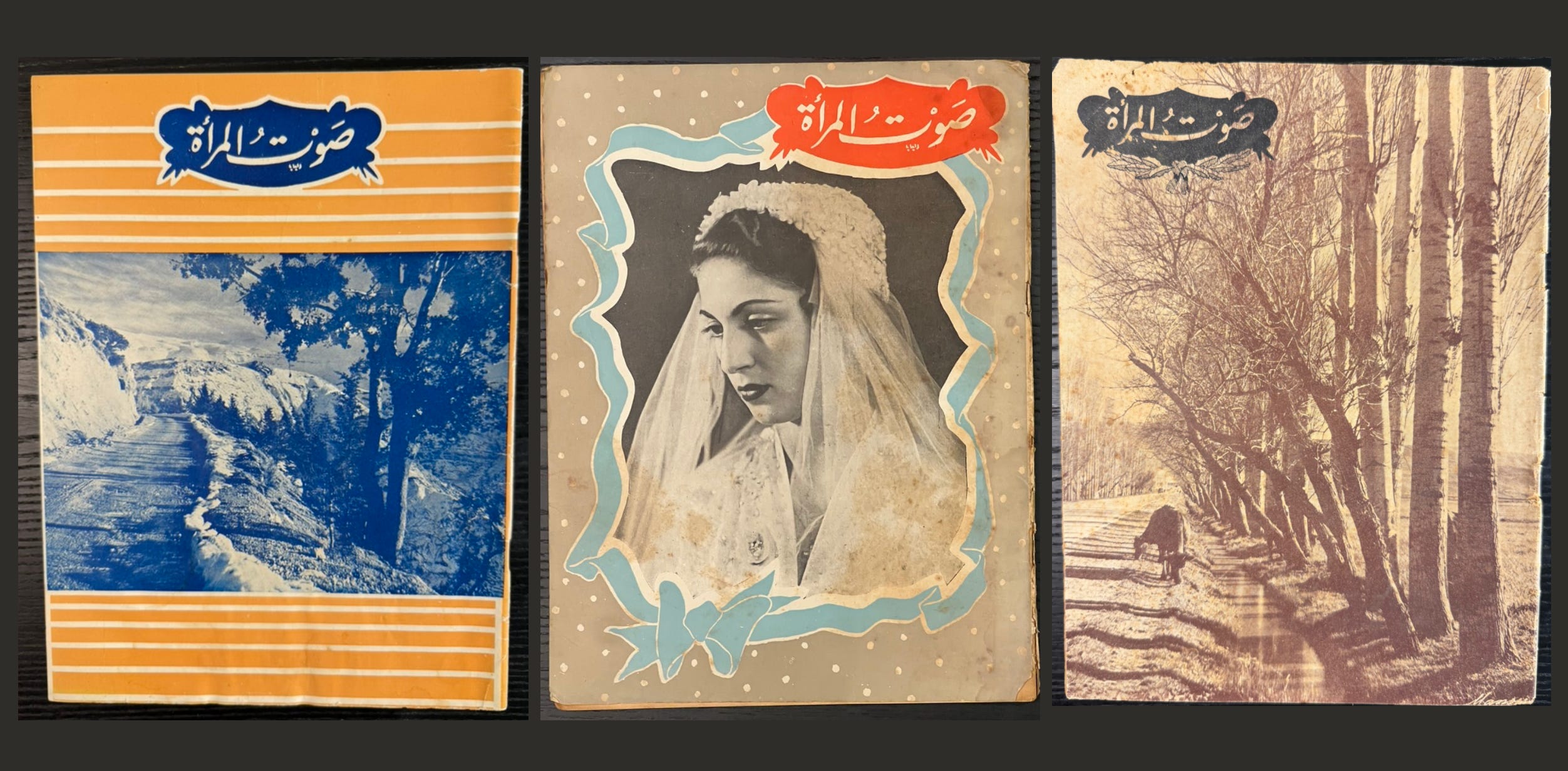
Like a kid, I liked the pictures, but I don’t read Arabic. Understanding what Sawt was really about felt far away. Only when AI started getting much better did a broader digitization and preservation effort become conceivable.
Even seeing these first issues pained me a bit, from an archival preservation perspective. It was clear—not particular to this magazine, but exemplified by it—how much work and care had gone into them. And yet there was very little about the magazine online. It was mentioned in a few scholarly articles, but seemed at risk of being forgotten.
Last December, when I was in Beirut for the holidays, I visited the library at the American University of Beirut. There, I found what turned out to be nearly the entire run of the magazine. They were able to scan all of their volumes for me2—145 issues, or about 7,000 pages worth. Although this lost some of the fabulous color prints, it allowed me to work with the data in bulk. (I had brought a camera to try photographing every page, but discovered that this tedious task would have taken the bulk of my time in the country.)
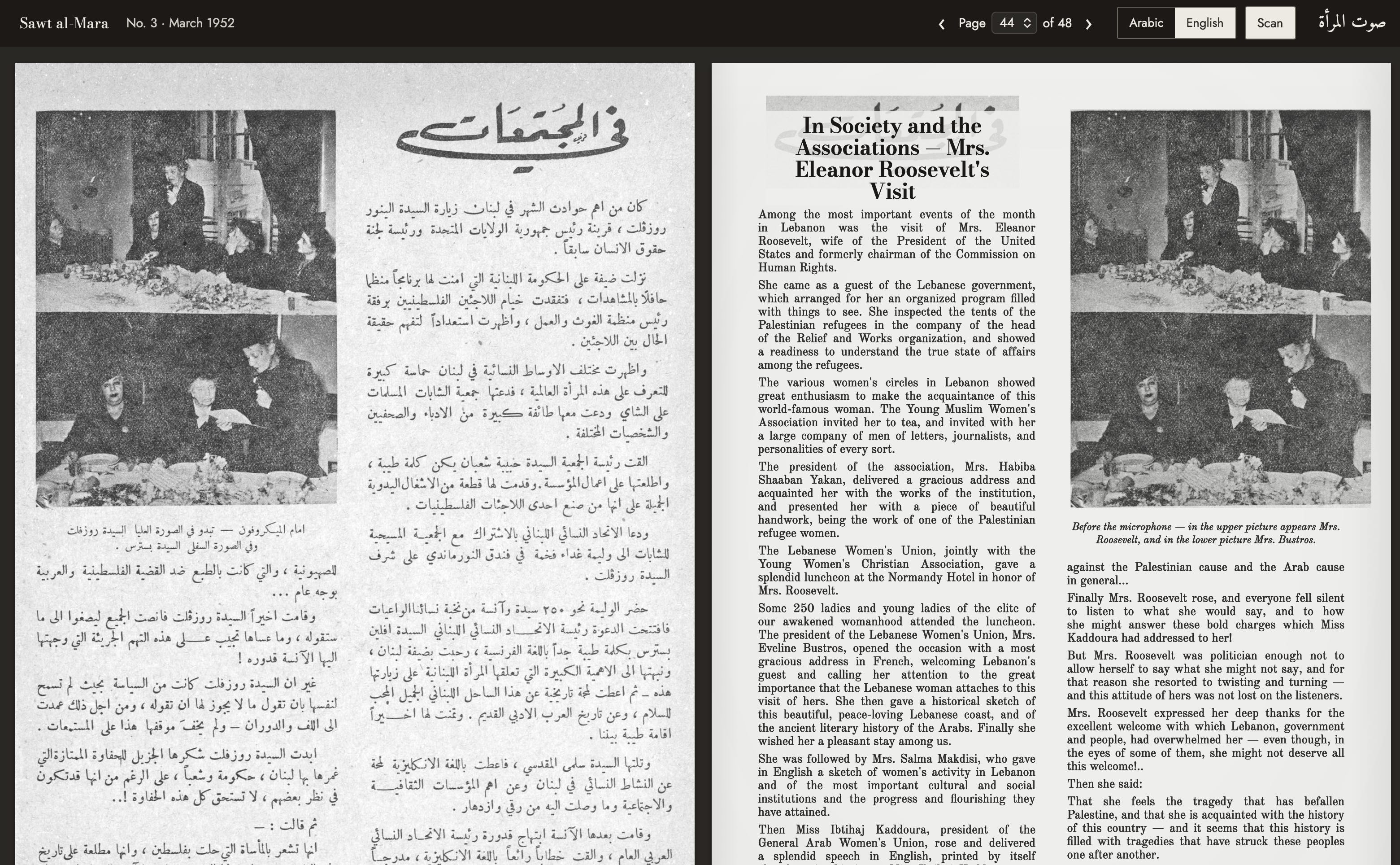
The first step was to OCR the data, turning the scanned images into digital text. As good as modern OCR software is, it’s not optimized for Arabic, noisy scans, or multi-column layouts, so this wasn’t trivial. I then had to stitch articles back together across pages, sometimes far apart in the magazine, before they could be translated. Finally, in the most novel technical step, AI turned each page of the magazine into an HTML page, both in Arabic and English3. (You can see an example in the screenshot above.) This wouldn’t have been feasible even two years ago—or rather, it would have cost millions of dollars, rather than thousands. Along the way, I also uploaded PDFs of the magazine scans to the Internet Archive for long-term preservation. [Update, Nov. 2026: taken down for now.]
Now, I was able to explore the full range of the magazine. There was poetry, fiction, criticism, fashion, news, society pages, and more. I did learn more about my grandfather—like that he was in a play. And found his marriage announcement, as well as articles by other family members, like this one by my great-aunt Lily, whom I only knew as a formidable opponent at playing cards.
I hope this is a useful resource. I plan to write posts going into more details on much of the above, but wanted to share this initial announcement first.
It turns out that Sawt al-Mara was not the first feminist magazine in Lebanon. There are several better contenders.
AUB doesn’t have the whole run of the magazine. In particular, I haven’t been able to find the first year, when it was published in a newspaper format.
This pipeline—transforming foreign-language scans to translated HTML layouts—seems generally useful. I may try it on a few other magazines and see how it goes.